Milly Albright
Freaky FridayMilly Albright is a student at Burroughs Junior High whose huge smile and enthusiastic manner do not erase the sadness Hadley senses beneath them. In the You Rock! Self Matters! group, Milly gives that gap between outward confidence and inward hurt a concrete shape: she recounts how her brother denied that she was his sister in front of his baseball-game audience. The story makes her both the group’s earnest advocate for self-esteem and the person most exposed to the damage its lessons describe.
Identity and Introduction
Hadley first notices Milly at school because her braces catch the fluorescent light. Milly greets her with a massive smile, but Hadley finds it unconvincing and senses a sadness nearby. Her friendliness is genuine rather than merely performative: when she asks whether Hadley is all right, Hadley recognizes that Milly sincerely wants to help, even though the attention is unwelcome.
Milly’s concern turns quickly into an invitation to attend the You Rock! Self Matters! group after school. Her enthusiastic assurance that the group really does rock contrasts with Hadley’s impatience and her view of the gathering as an unappealing collection of students. That mismatch establishes Milly as an earnest believer in a kind of support Hadley would rather dismiss.
Work in the Self-Esteem Group
The group meets in the library, where Milly has arranged chairs in a circle and only a handful of students have arrived. When Hadley, occupying Ms. Pitt’s role, shows up late and offers a strained apology, Milly greets her with an exaggeratedly bright smile and explains that they are running behind. The thin attendance and Hadley’s uncertain attempt to imitate Ms. Pitt’s manner make the group feel fragile; Milly nevertheless proceeds with its work.
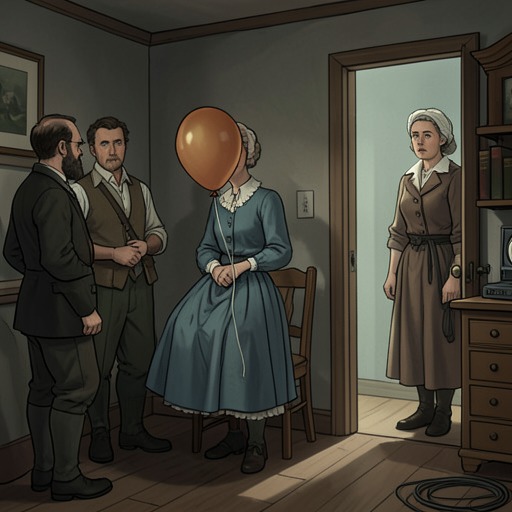
Milly explains the effect of negative comments through a balloon: other people’s words, she says, can make self-esteem leak away. The image becomes personal when she tells the group about her brother Trey. Proud that he is a high-school pitcher and eager to associate herself with his popularity, she goes to one of his games wearing his jersey and a button with his picture, carrying a sign to show her support. When Jake Hinkle asks Trey whether Milly is his sister, Trey shakes his head and says she is not. Milly’s account breaks off as her voice nears a crack; instead of finishing with words, she lets the balloon deflate until it is an empty strip of plastic. The object turns an abstract lesson into a visible enactment of the rejection she has just described.
Recognition and Connection with Hadley
The disclosure leaves the circle silent, and tears well in Milly’s eyes. A rigid boy then brings up a rumor about Hadley. Milly responds by insisting that everything said in the Truth Circle is valued and true, and looks toward Hadley, calling the revelation embarrassing. Her response keeps the group’s stated principle in force at a moment when its members might otherwise retreat into judgment or gossip.
Hadley meets Milly’s eyes and experiences their exchange as a real connection: she feels that they see one another. She stands to offer a hug, and Milly rises at the same moment. Hadley apologizes for not always having been as kind as she could be; Milly answers by telling her that she is always nice. The reply does not cancel Hadley’s apology, but it reveals how differently the two have understood their interactions. Milly’s openness gives Hadley an occasion not just to perform the teacherly encouragement she had expected, but to acknowledge her own conduct and respond to another student’s pain.
Relationships and Self-Worth
Milly’s story centers on her relationship with Trey, whose status as a high-school pitcher and driver of a Jetta makes her proud to be associated with him. At the game, she tries to make that connection visible through his jersey, picture button, and a sign. Trey’s public denial rejects precisely the sibling identity she had been displaying with such enthusiasm. Milly’s hurt is sharpened by the contrast between her admiration for him and his refusal to acknowledge her.
Her encounter with Hadley offers a different kind of recognition. Hadley has been embarrassed by the suggestion that she is related to her more admired sister, Tatum, and initially assumes that people will prefer Tatum to her; when Zane praises Tatum, Hadley briefly interprets his admiration as proof that she herself could not be attractive. Milly’s experience of being disowned by a sibling gives the group’s discussion of other people’s judgments a personal weight, while Hadley’s apology makes their connection reciprocal rather than simply instructional.
Narrative Significance
Milly’s account puts the book’s concern with self-worth into a specific social scene: a baseball game, a brother’s jersey, a button, a question from another boy, and a single denial. The balloon she empties gives physical form to the group’s central idea, while the silence and tears show that explaining hurt is not the same as making it disappear. Her candor changes the quality of the meeting, moving it beyond the awkward performance Hadley expected and toward an honest exchange between the two girls.
Milly also serves as a counterpoint to Hadley’s habit of measuring herself through other people’s attention and comparison. Her eagerness to claim Trey’s reflected status exposes how belonging can be made contingent on someone else’s approval; her willingness to speak about the injury, and to meet Hadley with warmth afterward, shows that rejection does not exhaust her capacity for connection. The scene’s force comes not from a resolution to Trey’s denial, which the episode does not supply, but from the recognition Milly and Hadley manage to offer one another.